Precedent Study:
… “but above all, the courthouse: the center, the focus, the hub; sitting looming in the center of the county’s circumference like a single cloud in its ring of horizon, laying out its vast shadow to the uttermost rim of horizon; musing, brooding, symbolic and ponderable, tall as cloud, solid as rock, dominating all: protector of the weak, judiciate and curb of the passions and lusts, repository and guardian of the aspirations and hopes”…
-William Faulkner, Requiem for a Nun
The courthouse in the square is uniquely American. To open gathering spaces in the center of towns can be found both in classical antiquity, as the Roman ‘agora,’ and throughout Europe dating back to medieval times, as Italian piazzas and Spanish plazas. In “The Central Courthouse Square in the American County Seat traces its roots to early eighteenth century settlements along the east coast…” Over 1,000 courthouse squares were built in counties through- out the United States.

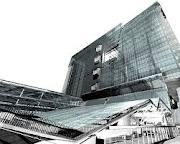
John Joseph Moakley United States Court- house in Boston, Massachusetts is located on Fan Pier.
-2 courtrooms for the Court of Appeals -25 courtrooms for the District Court -40 judges’ chambers
-Circuit law library
-Office of a United States Congressman -Offices for the United States Attorney -Extensive support facilities for the United States Marshals service and Pre-Trial and Probation services
-Day-care facility
-108′ high sky lit Rotunda, Great Hall shaped by a 372′ long sloped glass conoid
-Outdoor arcade
-2.3-acre landscaped park
Waterfront amenities
-Cafe
-Information center and excursion boat ticket office in an arcaded waterfront loggia -spaces for exhibitions, lectures, meetings, and dining in the Great Hall of the court- house
Materials
-Glass
-Water-struck brick with granite trim

The United States Courthouse in San Diego, designed by Richard Meier, consists of a sustainable modern tower and plaza for public use. This new architecture is integrated with the surrounding existing federal buildings and engages the urban fabric of San Diego.
The circulation of the main tower is located on the East facade to allow views overlooking the public plaza, city, and South Bay.
This slender tower is surrounded by a glass facade and oriented such that natural light enters the building from the East and West. The courtroom as well as most of the building is naturally lit with diffused sunlight.
The lobby is an elliptical volume with a glass roof allowing for sufficient day lighting and many levels of circulation to provide a playful transitioning space for visitors and employees

San Francisco Federal Building- Morphosis uses sustainable design to maximize energy efficiency to create a high quality workspace that redefines bureaucratic culture.
“The project has developed around three primary objectives: the establishment of a benchmark for sustainable building design through the efficient use of natural energy sources; the redefinition of the culture of the work- place through office environments that boost workers’ health, productivity, and creativity; and the creation of an urban landmark that engages with the community.”
A tall, slender tower that provides an energy efficient work/public environment through its shape, orientation, and integration of structural, mechanical, and electrical systems.
Public
-Free standing cafe
-Conference center
-Fitness center
-Daycare center
Circulation
-Places for employees to gather
-”Chance encounters”
-“Democratic layout”
-Work areas at the buildings perimeter
-Private offices and conference spaces are the core
-Skip stop elevators Crossectional interaction
-Sky gardens, tea salons
-Large open stair
-Flexible floor plans
-Elimination of corner offices
Energy Efficiency
-”Living skin”
-Integration of structural, mechanical, and electrical systems -natural ventilation – 70% of workspaces (6th floor and up) -natural light – 90% of workspaces
Folded perforated metal building skin shades the window walls of the North facade.
Computer operated panels open and close with the change of seasons/climate to provide comfortable, naturally ventilated temperature adjustments.



 [space + justice]